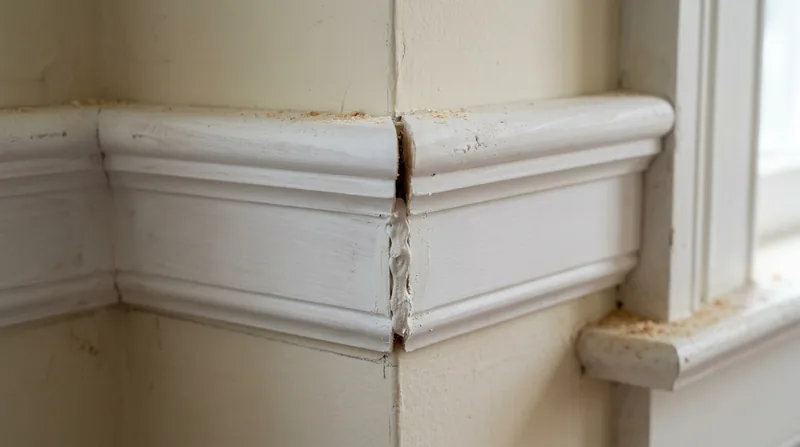




Crown molding and baseboard installation in Atlanta transforms a room from bare walls into finished space, and in homes across Inman Park, Druid Hills, Virginia-Highland and the city's Victorian and Craftsman districts, the right trim work anchors the architectural character that makes these neighborhoods distinctive. Atlanta's humid subtropical climate and dense tree canopy mean interior finishes face seasonal wood movement, moisture swings, and the need for materials and installation methods that hold tight joints year-round. Crown molding frames ceiling lines with clean geometry; baseboards protect walls and create visual weight at floor level. Both demand precision layout, accurate scribing around irregular plaster and settled framing, and the kind of finish carpentry that reads as built-in from day one, not applied afterward. We install crown molding and baseboards with tight, coped joints and clean lines throughout, matching period profiles for historic homes or keeping crisp modern lines for newer construction.
Why Crown Molding and Baseboard Installation Matters in Atlanta Homes
In a city where homes range from grand 1890s Queen Anne mansions to 1920s Craftsman bungalows to modern brick-veneer subdivisions, finish carpentry sets the tone for how a room feels. Atlanta's climate cycles between hot, humid summers and mild winters, which means wood moves seasonally, and gaps that weren't there in July can open in January. Baseboards take the impact of vacuum cleaners, furniture legs, and floor movement; crown molding sits at the ceiling line where settling framing and uneven plaster demand real skill to fit tight. Poor installation leaves visible gaps, nail pops, and coped joints that separate from the wall. Good installation reads as seamless and built-in, and it lasts decades without maintenance.
- We measure and lay out crown molding and baseboards to account for wall irregularities, settled framing, and seasonal wood movement common in Atlanta's older housing stock.
- We use coped joints rather than butt joints at inside corners, which stay tight as the wood moves and the house settles over seasons.
- We match existing trim profiles in historic districts (Inman Park, Druid Hills, Grant Park, Virginia-Highland) or install clean, modern lines in newer construction.
- We fill nail holes, sand, and finish on-site so trim integrates seamlessly with walls and ceilings rather than standing out as applied pieces.
- We work around electrical outlets, HVAC vents, door casings, and window trim without compromising the sight lines or proportions of the room.
Proper installation of crown molding and baseboards is the difference between a finished room and a room that looks incomplete, and in Atlanta's diverse housing stock, attention to existing profiles and local building practices matters.
Local example: A 1920s Craftsman bungalow in Candler Park had 3.5-inch baseboards with a simple ogee profile throughout the first floor. We matched that profile in three rooms, scribed the baseboards around a settling doorway jamb, and used coped joints at all inside corners so the trim stayed tight through Atlanta's seasonal humidity swings.
For guidance on what trim profiles work with your home's period or style, check the finish and trim carpentry page for more detail on how we approach period-correct and modern finish work.
How We Install Crown Molding and Baseboards: Our Process in Atlanta
Installation starts with a site visit to assess wall condition, ceiling height, existing trim, and any settling or irregularities that affect layout. We measure the room, identify the straightest wall to start from, and establish baselines for baseboards and crown molding using a laser level. Walls in older Atlanta homes often bow or settle unevenly, which means we scribe and fit trim to the actual wall condition, not to theoretical plumb or level. We cut coped joints at inside corners so trim pieces interlock and stay tight as seasonal wood movement occurs. Once trim is fitted and fastened, we fill nail holes with paintable filler, sand smooth, and prime and paint on-site or prepare for your painter.
- We establish level and plumb baselines using laser levels, accounting for settled or uneven floors common in Atlanta's older homes.
- We cut and fit baseboards piece by piece, scribing around door casings, electrical outlets, and wall irregularities for a seamless appearance.
- We use pneumatic finish nailers and construction adhesive to secure trim, fastening into studs where possible to resist seasonal wood movement.
- We cut coped joints at inside corners so trim pieces nest together and remain tight through humidity and temperature cycles.
- We sand, fill, prime, and prepare all trim for paint or stain, ensuring a professional finish that reads as built-in.
This methodical approach ensures that crown molding and baseboards stay tight and look finished, even as Atlanta's humidity cycles and houses continue to settle.
Druid Hills example: A 1920s Colonial Revival home had 4.5-inch baseboards with a dentil molding crown. Three rooms had settled doorways and slightly bowed walls. We scribed each baseboard to the wall, cut coped joints at all inside corners, and used construction adhesive and finish nails to lock the trim in place. The result reads as original to the home.
For a detailed walkthrough of our finish carpentry methods, see the finish and trim carpentry service page.
| Approach | Description | Best for |
|---|---|---|
| Coped joint baseboard installation | Inside corners cut with a coping saw so trim pieces interlock and remain tight as wood moves seasonally. | All baseboard installations, especially in older homes where seasonal wood movement is visible. |
| Crown molding with pneumatic finish nailing | Crown fastened into ceiling joists and wall plates with pneumatic finish nails and construction adhesive for maximum holding power. | Rooms where crown molding must span long walls or resist humidity-driven wood movement. |
| Scribing around irregularities | Baseboards and crown custom-fit to bowed walls, settled doorways, and uneven plaster common in Atlanta's historic homes. | Inman Park, Druid Hills, Virginia-Highland, Candler Park, and other historic districts where walls are rarely perfectly plumb. |
| Profile matching for period homes | Crown molding and baseboards custom-milled or sourced to match existing profiles in Victorian, Craftsman, Colonial, or Beaux-Arts homes. | Historic homes where architectural continuity and authenticity matter to the homeowner and neighborhood character. |
| Modern clean-line installation | Contemporary or minimalist crown molding and baseboards installed with tight joints and crisp proportions for newer construction. | Newer brick-veneer subdivisions and modern renovations where clean lines and minimal visual weight are desired. |
Crown Molding and Baseboard Installation Cost in Atlanta: What to Expect
Crown molding and baseboard installation in Atlanta starts at $450 for a single room with standard 3.5-inch baseboards and simple 4-inch crown molding, and scales upward based on the size of the space, profile complexity, wall condition, and the need for scribing around irregularities. A typical living room or bedroom (12 x 14 feet) runs $900 to $1,500 for both baseboards and crown molding, including finish preparation and on-site priming. Larger homes, multiple rooms, high ceilings, or complex profiles (dentil crown, ogee baseboards, chair rail) cost more. Wall irregularities, settled framing, and the need to scribe around doorways and outlets add time but ensure the trim reads as seamless rather than forced.
The main factors that affect cost are room size (linear feet of trim), profile complexity (simple vs. dentil or custom milled), wall condition (plumb and level vs. bowed or settled), and whether you want paint, stain, or finish applied on-site. Getting 2 to 3 estimates from carpenters in your area gives you a realistic range and allows you to compare approaches. Some carpenters charge by linear foot; others quote by room or by the job. Always ask what's included: fastening, filling, sanding, priming, and on-site paint prep should all be part of the conversation.
For a detailed pricing overview covering all our carpentry services, visit the full pricing page. Call us at (678) 284-2440 for a free estimate tailored to your specific room, trim profile, and wall condition.
What to Look for When Hiring a Crown Molding and Baseboard Contractor Near Me in Atlanta
Hiring a carpenter for crown molding and baseboard installation means looking for someone who understands your home's architectural style, can assess wall condition and settling, and has the skill to cut tight joints and scribe accurately. Ask potential contractors how they handle inside corners (coped joints are the professional standard, not butt joints), what they do about wall irregularities, and whether they sand and prepare trim on-site or expect you to hire a painter afterward. Check references, ask to see photos of finished work, and get multiple estimates so you understand the range and what different carpenters propose. In Atlanta's historic neighborhoods, knowing whether a contractor has experience matching period profiles matters; in newer subdivisions, clean modern lines and tight joints are the priority.
- Verify that the contractor is fully insured and can provide a certificate of insurance before work begins.
- Ask for references from recent crown molding and baseboard jobs in homes similar to yours, and follow up with at least two.
- Get a written estimate that specifies trim profile, room dimensions, linear feet of molding, and what's included (fastening, filling, sanding, priming, paint prep).
- Discuss wall condition and how the contractor plans to handle settled framing, bowed walls, or irregularities you've noticed.
- Clarify whether trim will be primed and paint-ready on-site or whether you'll need to hire a painter after installation is complete.
- Ask about the timeline: a typical room takes 2 to 4 days from measurement to finish-ready, depending on complexity and wall condition.
Working with a local carpenter who knows Atlanta's housing stock, understands humidity and seasonal wood movement, and has the skill to scribe and fit trim accurately ensures that your crown molding and baseboards stay tight and look finished for decades.
Ready to get started? Contact us for a free estimate at (678) 284-2440, and we'll assess your rooms, discuss your vision, and provide a clear quote within 24 hours.
Crown Molding & Baseboard Installation in Atlanta: Pricing Guide
| Service | Price | Details |
|---|---|---|
| Single room baseboard installation | Starting at $450 | Standard 3.5-inch baseboard, 12 x 14 feet, plumb walls, coped inside corners, fill and sand included |
| Single room crown molding installation | Starting at $500 | Standard 4-inch crown, 12 x 14 feet, level ceiling, coped inside corners, fastened to joists and plates, fill and sand |
| Baseboard and crown molding, full room | $900 to $1,500 | Both baseboards and crown in one room, standard profiles, coped joints, on-site finish prep, paint-ready condition |
| Complex profiles, multiple rooms, or irregular walls | On estimate | Dentil crown, custom-milled profiles, scribing around settled framing, or multiple rooms require site assessment for accurate pricing |
| Travel and estimates | Included and free | No travel charge in Atlanta and surrounding areas, free estimate within 24 hours at (678) 284-2440 |
Indicative pricing, the exact cost depends on square footage, finish, and site access. Free personalized estimate within 24h at (678) 284-2440.


